
Concrete block retaining walls in Cairns
We build everything from residential retaining walls to large engineered systems for developments, estates and subdivisions.
Duce Constructions builds engineered concrete block retaining walls across Cairns and Far North Queensland.
Built by a QBCC licensed builder, designed by RPEQ engineers where required, and managed from site inspection through to approvals, construction and handover.
Do you need a retaining wall?
A retaining wall holds soil in place where the ground changes level. You’ll typically need one when:
- A sloping block needs to be levelled for a building pad, driveway or usable yard space
- Soil is washing downhill during heavy rain and threatening structures or boundaries
- An existing wall is leaning, cracking or failing
- A new build, subdivision or development requires level changes across the site
- You’re losing usable land to erosion on a hillside or waterfront property
In the Cairns region, retaining walls are especially important. Heavy wet-season rainfall (over 2,000mm annually), reactive clay soils, and steep terrain mean unretained slopes deteriorate quickly. A properly engineered wall prevents erosion, protects structures, and reclaims usable land.
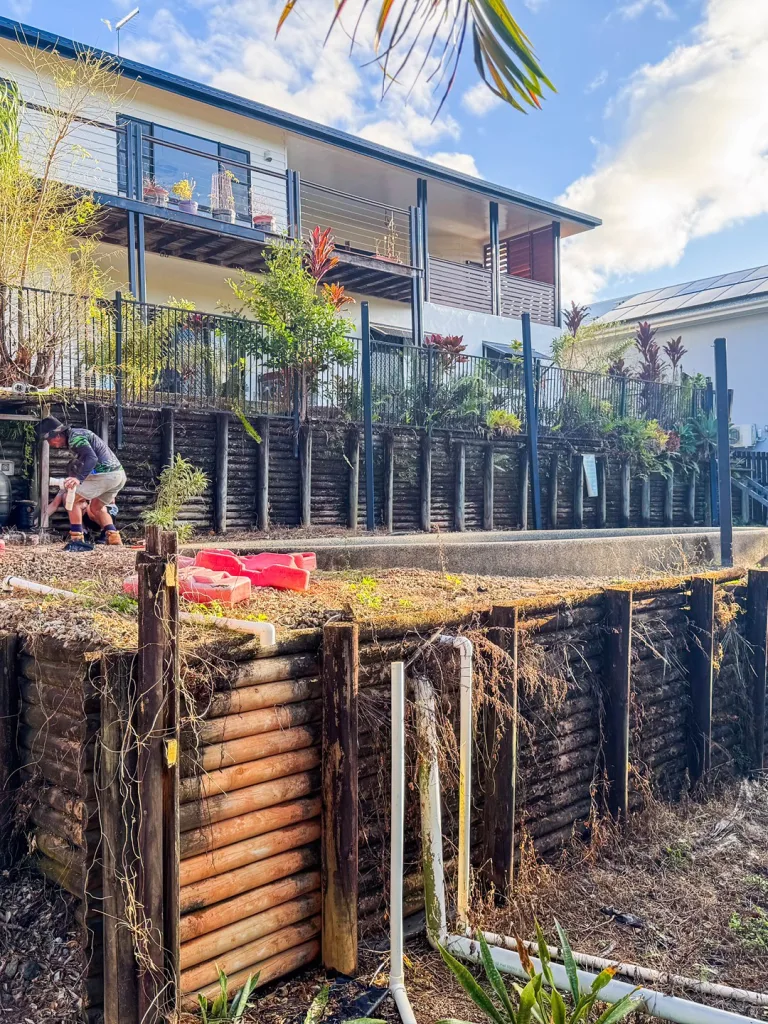
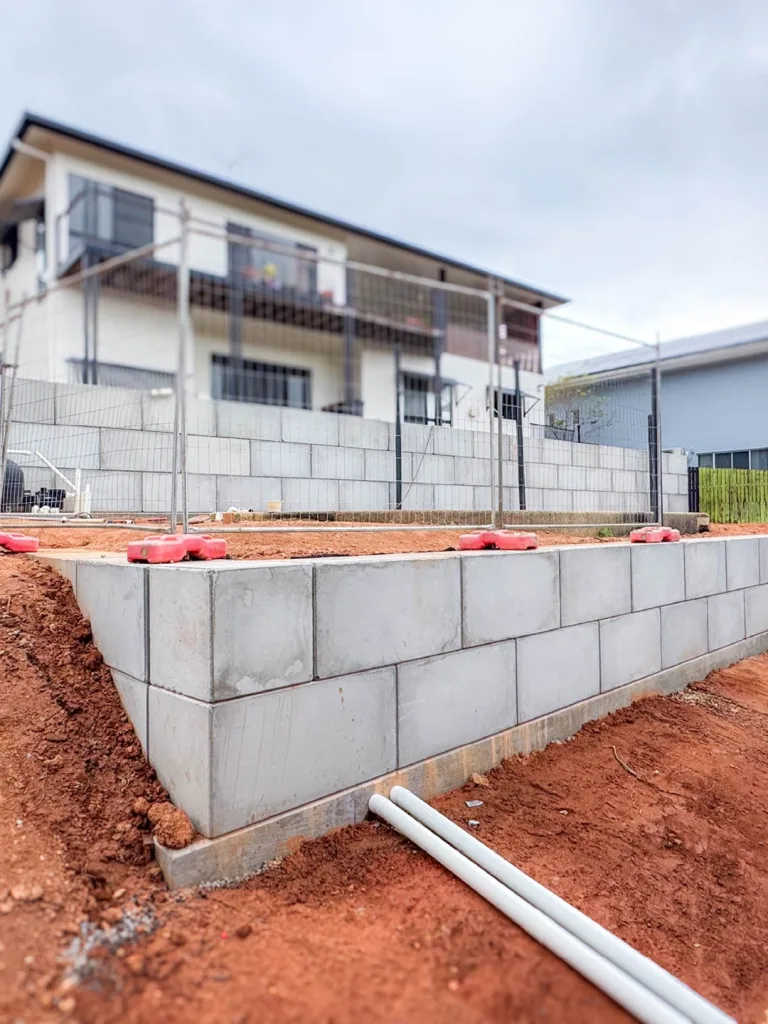
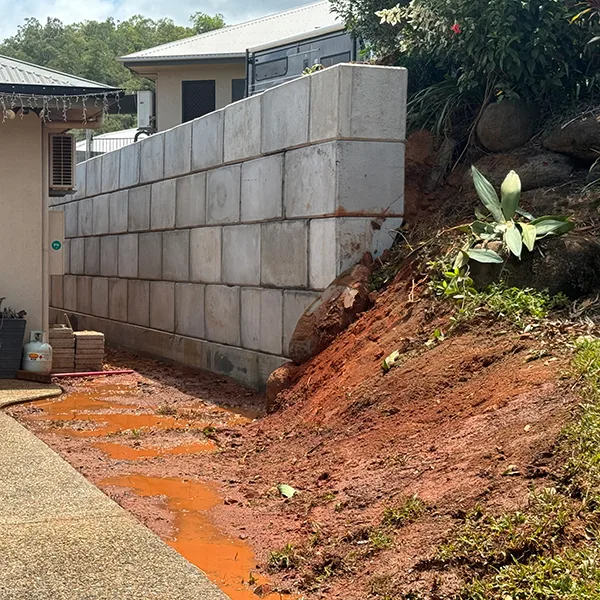
Failing timber sleeper wall replaced with engineered concrete block wall.
What we build
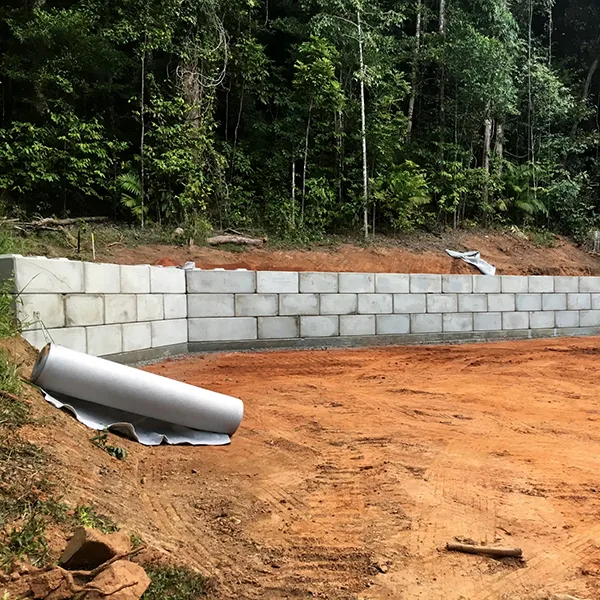
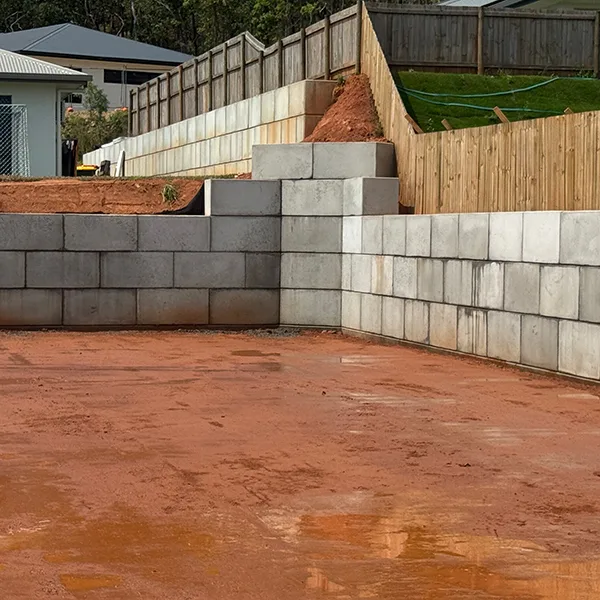
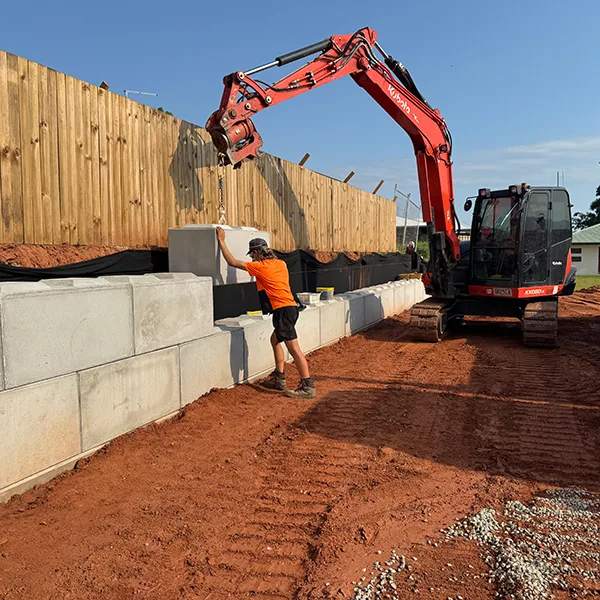
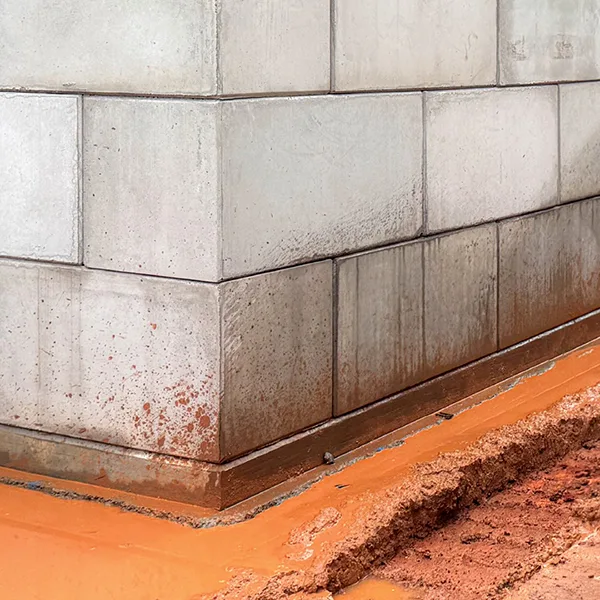
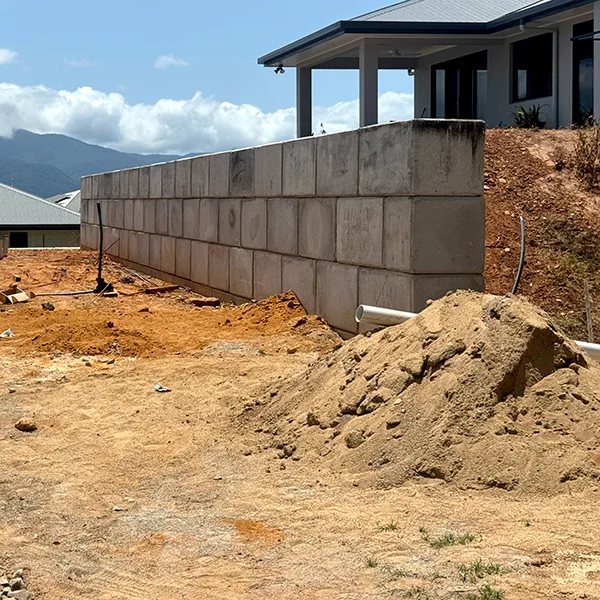
We specialise in large-format concrete block retaining walls using solid 600 x 600 x 1200mm interlocking blocks. Each block weighs approximately one tonne and is manufactured from recycled concrete. The blocks interlock to form a continuous mass wall. The sheer weight and interlocking profile of the system are what give it its structural integrity.
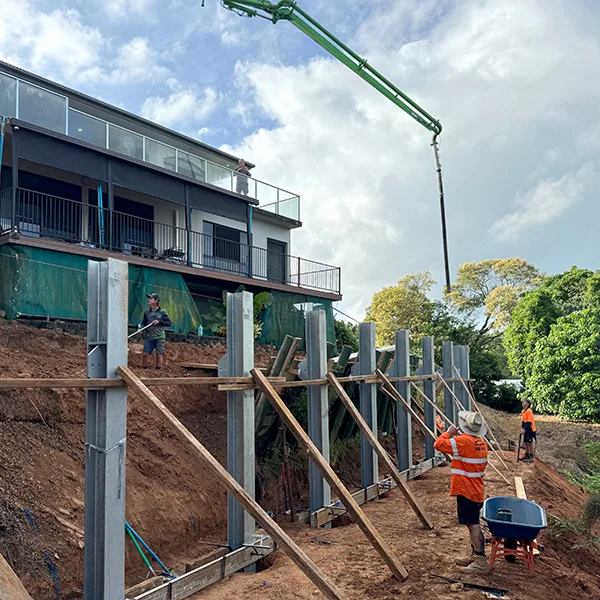
Single-tier walls are typically built up to around 1.8 metres. For greater heights, we build tiered wall systems — our standard tiered configurations reach 3 to 3.6 metres. Walls can be built higher with additional engineering.
Solid concrete block (interlocking)
Best for: structural walls, high walls, tropical conditions
Typical lifespan: 50+ years
Notes: engineered, approvals managed where required, our primary system
How we build our retaining walls
Our construction method is designed to prevent the most common causes of retaining wall failure: drainage pressure, poor backfill, and structural movement.
Engineered footings
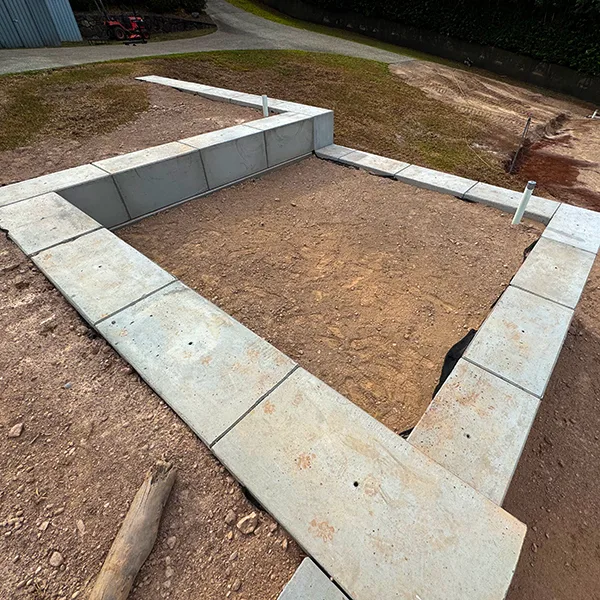
Every wall sits on a concrete footing designed for the specific soil type, wall height, and loading conditions of the site.
Solid interlocking blocks
Each block is solid recycled concrete weighing approximately one tonne. The blocks interlock to form a continuous mass wall.
Engineered backfill
Below 1800mm wall height, the void behind the wall is backfilled with clean drainage rock. Above 1800mm, we use drainage rock and no-fines concrete for additional structural support.
Drainage
Every wall includes an agricultural drainage pipe at the base, wrapped in geotextile fabric, with weep holes or outlet points to release water pressure. Additional drainage pits are installed when site conditions require them.
In-house crew and machinery
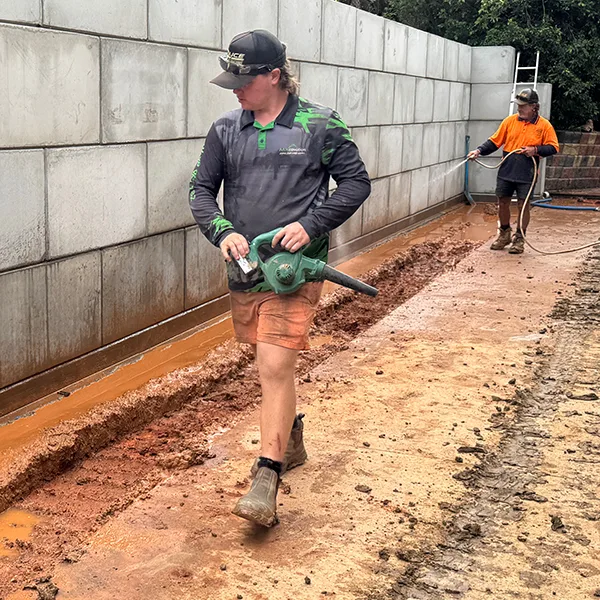
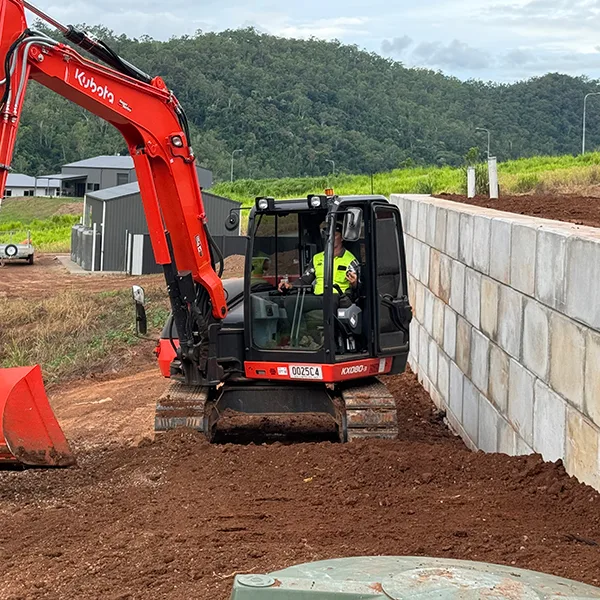
We own our trucks and excavation equipment. Excavation, construction, backfill, drainage and site clean-up are all handled by our team.
Why licensing matters
Licensing matters because the wall height and loading determine who is legally qualified to build it. In Queensland, retaining walls over 1 metre in height require building approval, structural engineering by a Registered Professional Engineer of Queensland (RPEQ), and construction by a QBCC licensed builder.
A structural landscaping trade licence only covers walls under 1 metre with no additional loading. Anything above that threshold requires a builder’s licence. Most residential retaining walls in the Cairns region exceed 1 metre due to the terrain, which means most walls legally require a licensed builder.
Duce Constructions holds a full QBCC builder’s licence with over 25 years of construction experience. We build retaining walls as structural elements, not landscaping features. Every wall comes with engineering documentation and certification on completion.
Before engaging any contractor, ask these questions:
- Do they hold a current QBCC builder’s licence (not just structural landscaping)?
- Will the wall be designed by an RPEQ structural engineer?
- Will they obtain building approval through a private certifier?
- Will they provide certification and engineering documentation on completion?
We provide all four as standard on every project that requires them. If a contractor can’t answer yes to these questions for a wall over 1 metre, the wall may not be compliant. Walls built without required approval can attract QBCC enforcement action and may need to be modified or removed.
What causes retaining walls to fail
Most retaining wall failures in the Cairns region come back to one or more of these issues:
Inadequate drainage
The number one cause of failure. When water has no way to escape from behind a wall, hydrostatic pressure builds up. Saturated soil weighs significantly more than dry soil, and that pressure eventually exceeds what the wall was designed to handle. In a tropical climate, drainage is the difference between a wall that lasts decades and one that leans within a few years.
Poor backfill material
Walls backfilled with the same clay soil that was excavated will absorb water, swell, and place enormous lateral pressure on the wall. Proper backfill uses graded drainage rock so water moves freely toward the ag pipe and away from the structure.
No structural engineering
A wall built without engineering is guesswork. Soil type, surcharge loads, wall height, and proximity to structures all affect the design. Without engineering, the footing depth, reinforcement, and drainage specifications are likely wrong for the actual conditions.
Wrong wall type for the conditions
Timber sleeper walls and lightweight block walls have limited structural capacity. In tropical conditions, timber rots and attracts termites. Lightweight blocks crack under sustained pressure. These walls often fail within 10-15 years.
Boundary and surcharge issues
Walls built too close to a building, fence, or another retaining wall without accounting for the additional load will fail prematurely. Engineering needs to account for everything within the zone of influence, including driveways, structures, and landscaping above.
If your existing wall shows signs of movement, cracking, or leaning, call us on 07 4033 7476.
We can assess the situation and advise on replacement options.
What affects the cost of a retaining wall
Retaining wall costs vary significantly depending on the site, wall height, and construction method. Below are the main factors that influence pricing so you can understand what’s involved before requesting a quote.
Wall height
The biggest single cost driver. A 600mm wall and a 2.4 metre wall are entirely different projects in terms of engineering, materials, footings, reinforcement and drainage. Every additional course of blocks adds weight, structural load and complexity. Walls above 1 metre also require engineering and building approval, which adds to the project scope.
Wall type
Concrete block, concrete sleeper, and steel H-beam with sleeper infill each have different cost profiles. Solid interlocking concrete block is typically the most durable option for tropical conditions, but the right choice depends on the site, the height required, and the finished look.
Site access
If machinery can reach the site directly, the wall goes up faster. Tight sites, steep blocks, narrow side access, established gardens or built-up areas will require more manual handling, smaller equipment, or longer construction timeframes. That affects labour costs.
Soil conditions
Clay, rock, sandy ground and fill all behave differently under load and when wet. Clay soils swell and increase lateral pressure. Rock requires more excavation effort. Sandy soils drain well but may need different footing designs. Soil type directly affects excavation time, drainage design and engineering.
Drainage requirements
Some sites need additional drainage pits, waterproofing membranes, or more extensive stormwater management beyond our standard specification. The extent of drainage work depends on the site’s water table, surrounding terrain, and the amount of water the wall needs to manage.
Engineering and approvals
Structural engineering and building approval add cost and time to the project, but they’re legally required for walls over 1 metre and ensure the wall is designed for the actual site conditions.
Length and layout
A straight wall is more straightforward than one that steps around corners, follows a curved boundary, or is built in tiers. Corners, returns and stepped configurations require additional engineering and construction time.
We can assess all of these factors during a free site inspection. Call 07 4033 7476 or request a quote online.
Approvals, engineering and height thresholds
We handle the approvals process from start to finish. Here’s what’s involved, when each element applies, and how wall height determines the requirements.
Height thresholds in Queensland
Under 1 metre. No building approval required, provided the wall is more than 1.5 metres from any building or other retaining wall, has no surcharge loading within the zone of influence, and only retains soil. Even at this height, we recommend engineering to ensure the wall performs long-term.
1 metre and above. Building approval is required. This means structural engineering by an RPEQ, building approval from a private certifier, and construction by a QBCC licensed builder. Most residential retaining walls in the Cairns region fall into this category due to the terrain.
Above 1.8 metres. Structural requirements increase significantly. Our specification moves from rock backfill to rock and no-fines concrete. Reinforcement and footing design become more substantial.
3 to 3.6 metres (tiered walls). At these heights, walls are built as tiered systems rather than a single vertical face. Tiered walls distribute the load across multiple levels and are our standard approach for larger height changes. Walls can be built higher with additional engineering.
Combined height with fencing. If a retaining wall and fence together exceed 2 metres along a boundary, additional council consideration applies.
Height is measured from the natural ground level on the low side to the top of the wall, not from the finished surface.
When council approval is required
In Queensland, building approval is required for any retaining wall that:
- Is over 1 metre in height above the natural ground level
- Is within 1.5 metres of a building or another retaining wall
- Supports any surcharge load (driveway, structure, heavy landscaping)
- Is located in an overlay area under CairnsPlan 2016 (such as the Potential Landslip Overlay or Hillslopes Overlay)
Building approval is obtained through a private building certifier. We engage the certifier, submit the engineering drawings, and manage the approval process on your behalf.
When engineering is required
Structural engineering by an RPEQ is required for any wall that needs building approval. The engineer designs the footing, reinforcement, drainage, and backfill specifications based on site conditions, wall height, soil type, and loading.
Even for walls under 1 metre, we recommend engineering.
A wall that’s technically exempt from approval still needs to meet structural requirements.
Boundary walls
Retaining walls on or near a boundary require careful consideration. The combined height of a retaining wall and any fence above it cannot exceed 2 metres along a boundary without additional council assessment. If the wall affects a neighbour’s property, for example, by changing drainage patterns or soil levels, this needs to be addressed during the design and approval process.
What we handle
We manage engineering, council approvals, excavation, construction, drainage, backfill, site clean-up, and handover of all documentation and certifications. You don’t need to coordinate engineers, certifiers or council separately.
Not sure what approvals your project needs? We’ll tell you during the site inspection. Call 07 4033 7476.
Lifespan and maintenance
How long do solid concrete block retaining walls last?
A properly engineered concrete block retaining wall has a design life of 50 years or more. The blocks are inert: they don’t rot, aren’t susceptible to termites, and don’t corrode. The longevity of any retaining wall depends on the quality of the drainage and backfill material, and on whether it was engineered for the site conditions.
By comparison, timber sleeper walls in the Cairns climate typically last 10–15 years before rot and termite damage compromise the structure.
How much maintenance is required?
Concrete block walls require very little ongoing maintenance. We recommend:
- Keeping drainage outlets clear of debris and vegetation
- Checking for signs of soil movement or cracking after significant wet-season events
- Ensuring landscaping above the wall doesn’t block drainage or add unplanned surcharge loads
- Keeping trees with aggressive root systems away from the wall and drainage lines
If the wall was built with proper engineering, drainage and backfill, routine checks are all that’s needed.
Our process
Contact us
Call 07 4033 7476 or send a message through our website.
Site inspection and quote
We visit the site, assess conditions, and provide a detailed quote, typically within 1 business day.
Engineering and approvals
Where required, we organise structural engineering and building approval on your behalf.
Construction
Our in-house crew handles excavation, construction, drainage, backfill and all earthworks.
Clean-up and handover
We remove all waste, clean the site, and hand over engineering documentation and certifications.
Areas we service
We build retaining walls across Far North Queensland, including Cairns city and suburbs, the northern beaches (from Machans Beach to Palm Cove and beyond), the southern corridor (Gordonvale, Edmonton, Babinda), the Atherton Tablelands (Atherton, Mareeba, Kuranda, Tolga, Yungaburra), and surrounding rural and semi-rural properties.
We also work with developers on estate and subdivision projects throughout the region.
If you’re unsure whether we service your area, call us. If it’s in FNQ, the answer is probably yes.
Get a free quote
Every site is different, and the only way to give you an accurate price is to see it first. We offer free site inspections across the Cairns region and will typically have a quote back to you within 1 business day.
Call us: 07 4033 7476
Email: [email protected]
Or fill out the contact form and we’ll be in touch.